All our facilities have the ISO14001:2015
certification, which proves the efficiency of our Environmental Management Systems.
In 2024, we supplemented the 2022 climate-related analysis with a new comprehensive analysis and reporting of climate risks and opportunities aligned with the Task Force on Climate-Related Financial Disclosures (TCFD), addressing the pillars of Risk Management, Governance, Strategy, and Targets & Metrics.
In addition, we included a quantification of climate risks and opportunities, considering temperature increase scenarios toward 2030 and 2050.

As part of our ongoing commitment to environmental stewardship, each of our
facilities implements tailored programs and initiatives aimed at reducing our environmental footprint.
2024 Environmental Highlights
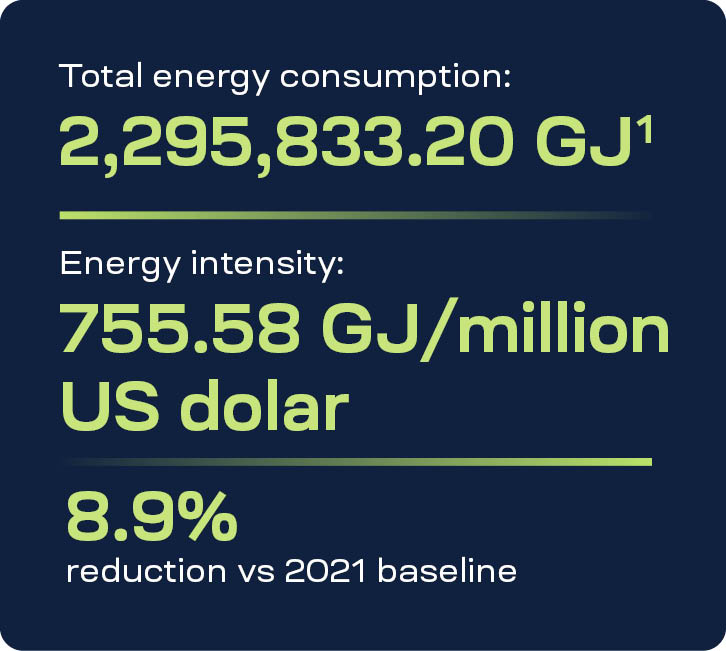
Two of our manufacturing facilities, Osasco and Jamshedpur, successfully completed ISO 50001 audits, with official certification expected in 2025. We are committed to achieving 100% ISO 50001 certification across all manufacturing sites in the future.
WOur Apodaca facility entered the wholesale electricity market, a move expected to reduce our global Scope 2 GHG emissions by over 20%.
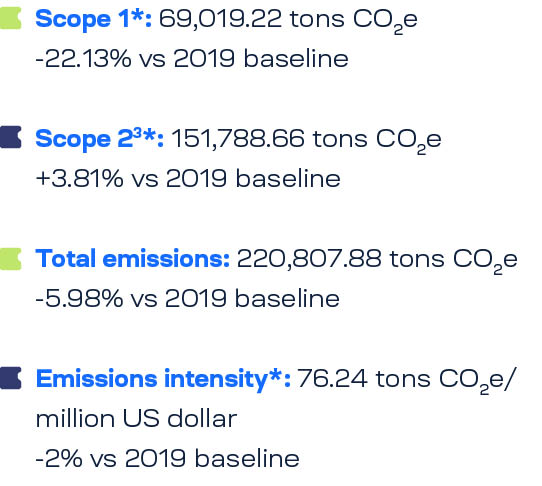
Emissions²
58% of the Osasco plant’s
total energy consumption
in 2024 came from 100%
renewable sources.
¹Total energy consumption increased against 2023 since our Guanajuato plant began operating completely.
² Please refer to our Basis of Reporting, located immediately after the Assurance Report, at the conclusion of our sustainability report.
³2024 Scope 2 is locationbased and includes emissions from manufacturing facilities, administrative offices, sequencing centers, and technology centers.
*ERM CVS assured metrics.
Since 2019, we have achieved a 6.58% reduction in our absolute greenhouse gas (GHG) emissions.
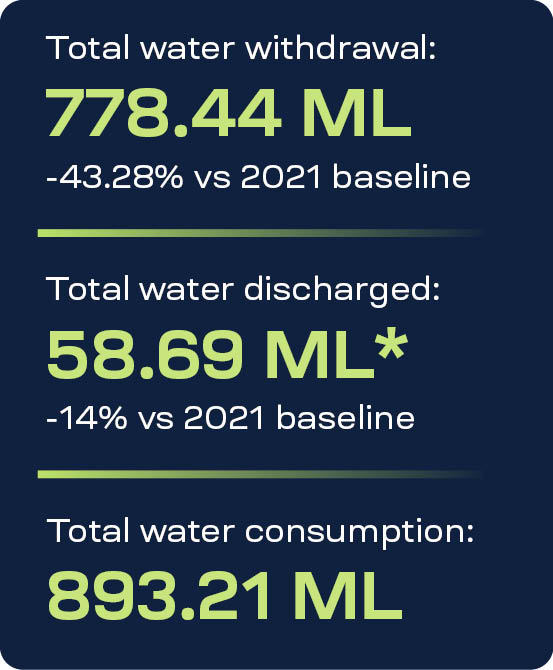
We began developing a comprehensive Water Stewardship Policy that will serve as a guiding framework for setting measurable objectives and evaluating progress.
*Data based on estimates derived from the average change observed in previous years. This approach was necessary as we are currently in the process of improving our data estimation methodologies and installing water flow meters across relevant facilities. We expect to report more accurate and reliable discharge data in future reporting periods. This interim estimation method ensures continuity in reporting while maintaining transparency about current data limitations.
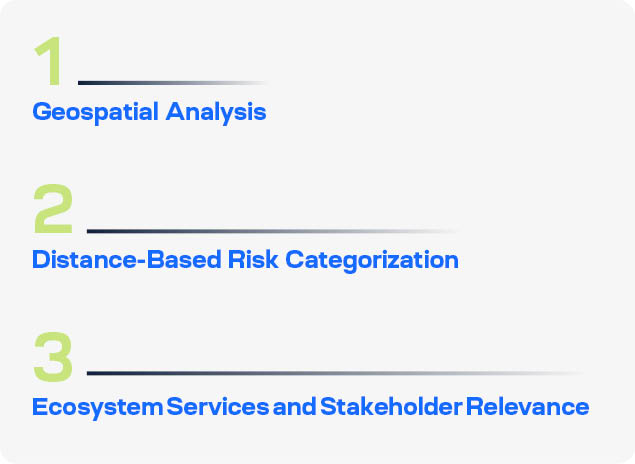
We conducted a proximity-based biodiversity assessment. This approach involved the following steps:
This analysis identified six facilities, in Mexico, Brazil, India, Thailand, and Argentina, located within 30 km of protected areas.